Does it make sense to
save water but
waste electricity?
save water but
waste electricity?


Voda represents our response
to that question.
A Patented Zero Carbon, Space Saving & Cost Efficient
Rainwater Harvesting System
For the first time,
rainwater harvesting is
stylish & easy
Select from a range of
sizes, specifications and price points.
Our goal is simple - to secure our water resource, one Voda at a time


Redefining sustainable solutions for the future
As a rainwater harvesting system specialist in Malaysia, Green Master Harvest designs and supplies rainwater harvesting systems under the brand Voda (patented under MY-178044-A).
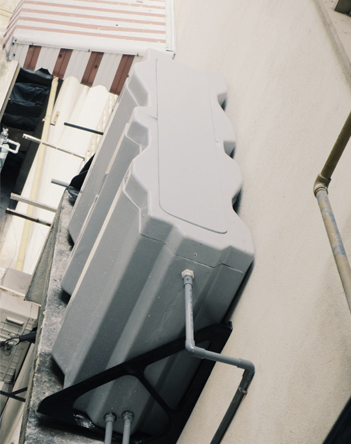
What sets Voda apart from traditional rainwater systems is its design, being one of the first that does not require an electrical pump, functioning only by gravitational force.
Backed by our design & architectural team, we also offer rainwater harvesting system advisory/consultations, design & build and customisation services to accomplish tailored solutions that is zero/low carbon.
Various Designs To Fit Every Need
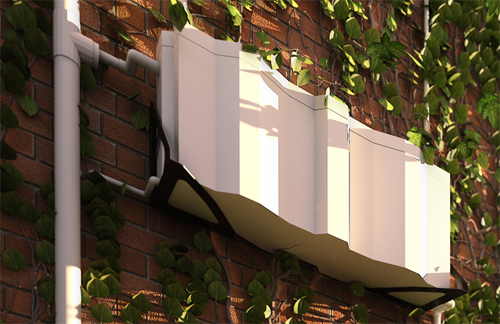
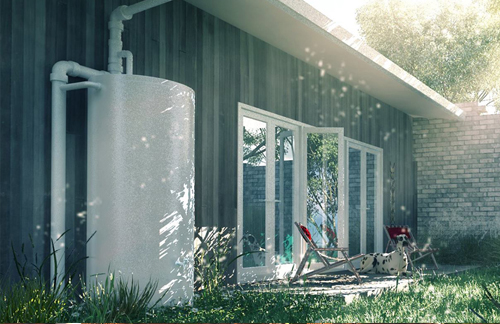
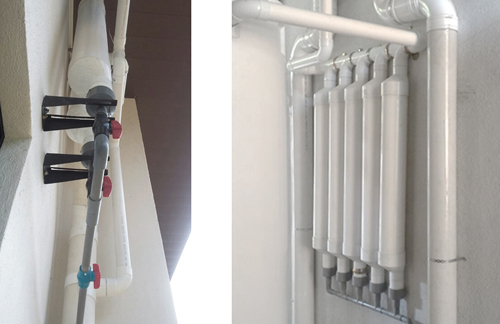
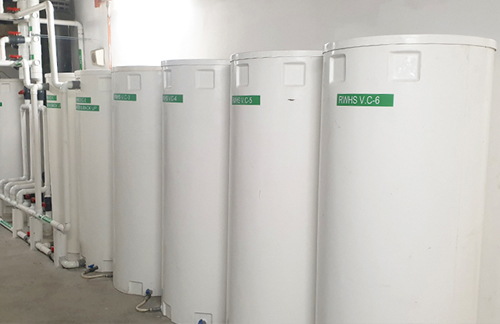
Voda has served a diverse range of clientele in Malaysia comprising corporates, property developers, architects, engineers and household consumers in fulfilling their water-conservation intentions.
Throughout our work, our approach is consistent – which is to provide clients high-quality water saving solutions that are practical, cost saving, eco-friendly, stylish and optimal for their structures.

– Henry Ford
We see our role in the community a pivotal one in averting a water crisis.
We do so by carrying various activities with 2 objectives in mind:-
Among activities, we’re carried out give-back programs benefiting various schools/NGOs as well as talks on water preservation & rainwater harvesting.
Featured on:- 



Choosing a suitable rainwater harvesting system can be a daunting task, especially when there are a vast array of systems in the market.
The technicalities and functionalities of each system could differ from one another, which makes comparing systems difficult.

Choosing the right system for your home or project doesn’t mean that you have to be burdened or too bothered by these technicalities. Rather, what could lead you to your “perfect rainwater harvesting system” are only 3 simple but important considerations/guiding principles.
Will you be using it for toilet flushing, landscaping, car washing or general washing?

Simple logic will tell you that if you are going to use rain only to water your moderate piece lush garden, there is no need to go for a giant-sized rain tank.
As simple as this may seem, we have received many requests for large rain tanks for small-scale usage.
So now that you are clear with your rain harvesting objective, how much water do you typically use for these activities?
Some of our more conscious customers have been able to tell us exactly how many litre goes in to their garden, for example. However, if you have never kept tabs, there is nothing to worry about.
During the information gathering stage, a rain harvesting specialist should be able assist in estimating how much water is used in your daily activities.
For plant watering, we do so based on your gardening land area size.
For toilet flushing, we do so by considering the number of people & number of toilets in the house, among other variables, for example.
That is to enable you to work backwards in determining how large a tank you require & how much water you will eventually save.
With the help of meteorology data, we also consider the frequency of rainfall to estimate how often the tank gets filled.
There are more drawbacks in bigger tanks than in smaller ones.
Not only bigger tanks would lead to wastage if you end up using much less, there is something about tropics with abundant rainfall like Malaysia which you need to understand.
If only a small portion of rain is used while the bulk of it stays stagnant, still rainwater would potentially cause problems like algae growth & mosquito breeding.
Users who have experienced these issues often end up emptying their rain tanks and calling rainwater harvesting a day – which is, again, wasteful.
This is the reason why we built Voda Rainwater Harvesting System in such slim dimension – to enable constant water movement.
People who go for bigger tanks are also often under the impression that bigger tanks means saving more. Bear in mind though, the amount you collect does not always equal to the amount saved.
The amount of water saving ultimately depends on you.
How much rain are you willing use (i.e. to what extent are you willing to let rain substitute water)?
Studies have shown that almost half of an average household’s water consumption goes into non-potable uses. This means that, if you are willing to use rain to its highest potential, you can be comforted that you’ll enjoy some 50% slash in water bill at the very least.
Rainwater harvesting systems are broadly categorised into conventional and unconventional systems.
Conventional systems are mostly stored on the ground or underground. The commonalities with these tanks are they are often bulky (suitable in countries with long durations of dry spells) and use electricity pumps.
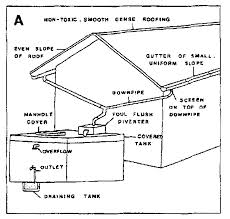
On the other hand, unconventional systems are gravitational – which means rather than using electricity, they function on gravity. Because of this, most unconventional systems are parked at a high altitude, be it in roof attic or on a concrete slab high up.

Conventional tanks do have its plus. They store a substantial amount of water and are very suitable for large-scale developments. Nonetheless, the usage of pump may mean that it is not environmental friendly, it jacks up the cost of a system and it requires regular maintenance. Its bulkiness also requires a large storage space. This could be why there is a changing preference to unconventional systems, especially among landed developments and residential premises.
People who go for bigger tanks are also often under the impression that bigger tanks means saving more. Bear in mind though, the amount you collect does not always equal to the amount saved.
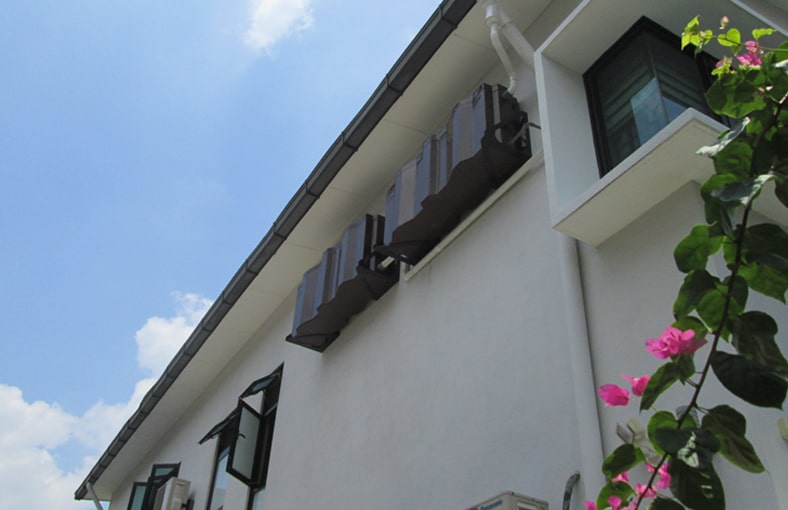
The creation of Voda was essentially premised on the goal of overcoming these issues. By wall mounting the system, we are able to achieve space efficiency, zero carbon capability, affordability and easy maintenance all at once.
Aside from these 2 broad categories, there are also DIY systems. We have visited homes who built their own systems. Some were successful and have continued to use it. Others, whose tanks became breeding grounds for mosquitoes, ended up dismantling the tanks. Therefore, it is important to choose a tank with practicality in mind.
We applaud people who harvest rain voluntarily out of protecting our dwindling water resource.
Despite the rising cost of living and the low water tariffs, they invest in rainwater harvesting any way even when they didn’t have to.
We believe these users understand the big picture of why rainwater harvesting has become an urgency.
Even then, this doesn’t mean cost efficiency is not an important consideration.
Prices of rainwater harvesting systems, ranges between RM2,000 and RM10,000, and may even go up to RM25,000 depending on how sophisticated you want your system to be.
In determining this, it is utmost imperative to have consideration #1 Capacity & Usage well defined. Otherwise, you may find yourself buying features you don’t need.
For example, we would never urge customers to purchase the First Flush Diverter/System if they only want to harvest rain for garden use.
For the benefit of those who don’t know, the First Flush Diverter/System helps trap the first 10%-15% of the rain which normally contains contaminants caused by birds’ droppings, aged roof or even acid rain; the feature is normally a second-tier cleaning mechanism as a rainwater harvesting system would already be equipped with a Filter by default.
Of course, customers can always opt for the First Flush Diverter at their own discretion but it is not necessary.
Likewise, if your premise has a sizeable slab where your rainwater tank can sit on and you are not too particular about water pressure, then it is not necessary to go for a pump-equipped rainwater harvesting system.
Overtime, we have learned the differing needs among users and have made other variations to meet them.
Although Voda has the ability to solve most issues in rain harvesting and can be used for a variety of usage (both toilet flushing & various irrigation), sometimes customers are on a lookout for a simple no-frills system just for minimal usage like gardening.
That was why we debuted Voda Cylinder, a no frills ground tank with a minimalist design. Apart from affordability, the beauty of Voda Cylinder is that it also comes with various sizes and price points that could meet any requirement.

Making the right choices could save you a ton of money. Therefore, it is crucial to engage a rainwater harvesting specialist that could offer you various options to arrive at the most optimum one.
The way rainwater harvesting works can summarised in 3 steps:-


Malaysia is blessed with an abundant and frequent annual rainfall of 2000mm to 2500mm. Therefore, it is a waste should all the rainwater is drained off instead of being used.
Rainwater harvesting is a process of collecting and storing rainwater for reuse.
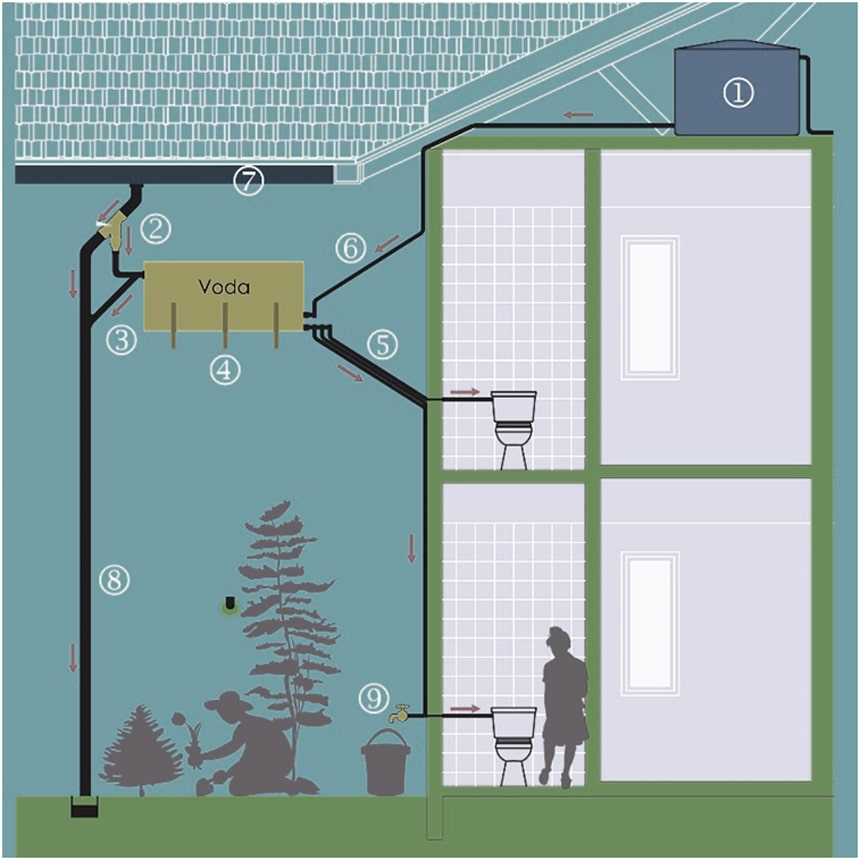
The rainwater harvesting process begins by collecting rainwater.
Rainwater typically falls onto our roofs and subsequently collected by gutters and channelled to rainwater downpipes be drained off.
To harvest instead of wasting away all the rainwater, a rainwater filter diverter (Voda Self-Cleansing Filter) is installed at the rainwater downpipe to filter & divert rainwater into a storage tank (Voda Rainwater Tank).
Rainwater is then stored in a rainwater tank (Voda Rainwater Tank). Rainwater tanks are available in many sizes depending on the user’s intended usage (i.e. what is the rainwater used for) & space availability (i.e. how much space does the premise have for a rainwater tank).
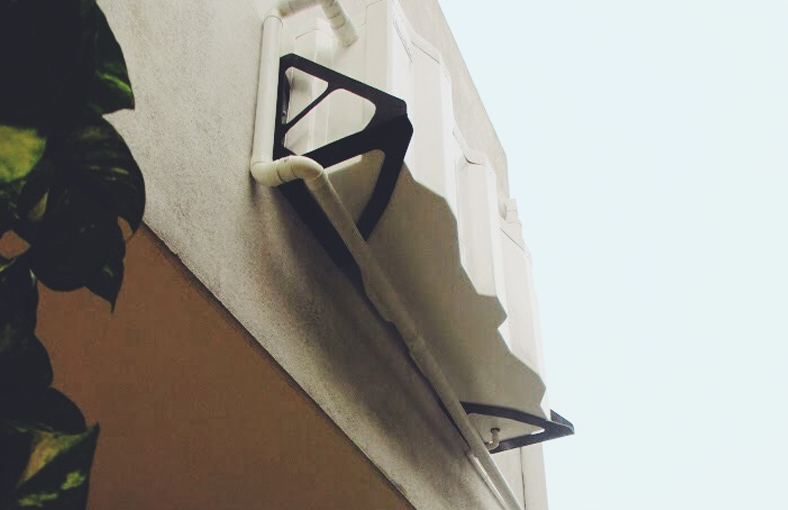
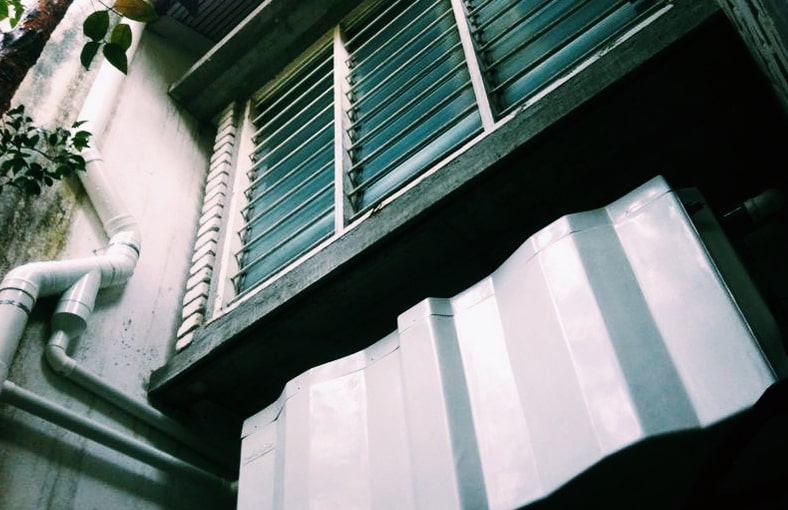
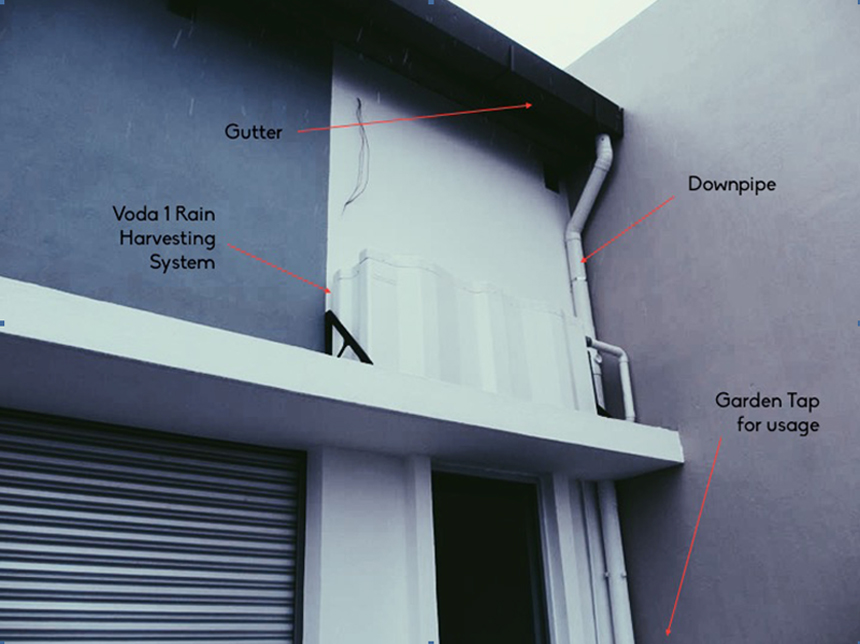
Unlike traditional systems that are bulky and space consuming, Voda Rainwater Harvesting System, given its rectangular and wall mounted design, is slim and space saving. Its wall mounted design also enables the system to be zero carbon & gravitational (functioning only by gravity force) instead of relying on electricity.

Rainwater stored then can be used to serve a variety of usage including watering plants, landscaping, outdoor washing and toilet flushing.
For more information on Voda models, download our Brochure here.
To obtain a proposal, contact us.
Rainwater can serve variety of usage including watering plants, landscaping, outdoor washing and toilet flushing. Because rainwater does not go through extensive filtration like that of municipal water, rainwater harvested is suitable only for non-potable uses (i.e. usage that does not require water of drinking quality).

That said, the savings from rainwater harvesting usage can be very substantial as non-potable use accounts for up to 50% of water usage in a household. Depending on the rainwater storage capacity, rainwater harvesting could halve water consumption despite its usage being limited to non-potable use.
As rainwater does not go through as extensive filtration like that of municipal water, fine particles may still be found in rainwater. Plus, rainwater consumed is not direct but goes through roofs, gutters and pipes which have different cleanliness level. Likewise, some areas are more polluted than others – which may affect the purity of harvested rain. Therefore, user’s discretion is needed when using rainwater for laundry or car washing.
Generally, rainwater is more pure than municipal water as it contains less salts, minerals and chemicals than the latter. Most gardeners also believe that water of a slightly acidic pH is better for soil health. In this regard, rainwater is slightly acidic (pH 5.6) while municipal water is more alkaline (between pH 6-8.5).


For more information on Voda models, download our Brochure here.
To obtain a proposal, contact us.
The United Nations predicts 50% of the world is estimated to suffer water stress by 2050 while 1.2 billion people will lack drinking water. This is attributed to the world’s growing population and an increasing global temperature (global warming) on the back of rising human activities such as deforestation, industrialisation etc.
On the national front, Klang Valley & Negeri Sembilan have experienced severe water crisis in 2014 where residents were hit by hot & dry spell causing a substantial drop in water dam levels. The crisis, which lasted from February to August 2014, did not only resulted in disruption of livelihood but severely affected economic activities.

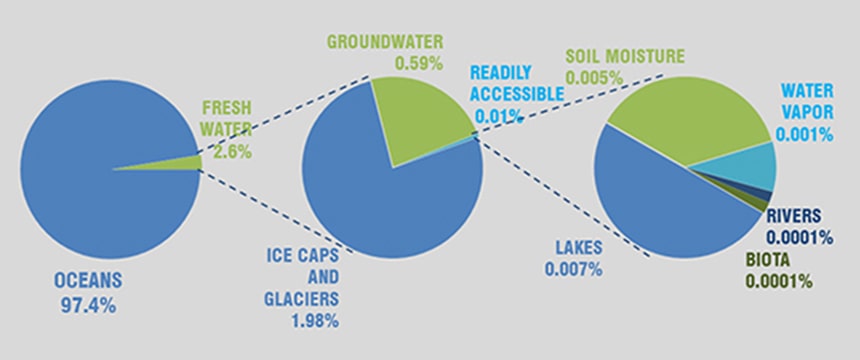
While our earth is made of up of 70% water, only a small percentage of water is fresh water which is suitable to be treated for drinking. Of the small 2.6% fresh water, a larger portion is trapped in ice caps & glaciers, leaving only a small 0.59% of ground water for our consumption.
Ocean water can be treated for drinking. As ocean water is made out of saltwater, it requires a desalination process to remove mineral components from saline water to produce water suitable for human consumption.
However, there are major disadvantages with desalination. Despite hefty infrastructure costs to build desalination plans, desalination only contributes a small 1% of the world’s drinking water. Due to its energy consumption, not only does it intensify carbon emission, desalinating sea water is generally more costly than fresh water from surface water or groundwater, water recycling and water conservation. It’s been reported that some desalination plants have also caused marine environment harm.

Rainwater falls on your roof, making the water source free. One only requires to collect and harvest it into storage to be reused later.
Rainwater can serve a variety of non-potable usage including watering plants, landscaping, outdoor washing and toilet flushing – which could save up to 30%-50% of water consumption.
Read also: What Can Rainwater Be Used For
Worry no more should there be a water cut or an emergency situation. Plants will not be left to die. One will always have alternative water ready. Furthermore, rainwater harvesting helps reduce reliance for municipal water. By replacing with rainwater for plants, outdoor washing, toilet flushing etc, treated water can be saved and preserved for drinking and survival.
The process of treating, heating and distributing municipal water consumes energy and creates carbon footprint. On the other hand, rainwater harvesting, if gravitational without a pump, is zero carbon.
Read also: How Does Voda Rainwater System Works
When one installs a rainwater harvesting system, it’s not only beneficial to the home itself but it helps raise awareness within the community. Likewise, when a school, office or an institution practices rainwater harvesting, it does not only serve as a water saver but a reminder of the importance of water.
Most traditional systems require electrical pumps to function, to pump the conserved rainwater from the rainwater tank placed on ground or underground to the outlets or WCs. These pumps are also costly and entail costs to replace and maintain. Also, one would consider the cost impact should electricity tariff goes up.
The purpose of harvesting rainwater is to be kind to environment, amongst many reasons. However, as aforementioned, most systems require electrical pumps to function – which essentially increase carbon emission while defeating the objective of being environmental friendly.
Acknowledging the need of an easy-to-use and a zero-carbon rain harvesting system was what compelled us to embark on extensive research & development efforts on rainwater harvesting system.
With an aim to have more people partake in rainwater harvesting and to secure our most precious resource, we designed the Voda Rainwater Harvesting System.
With Voda, Rainwater Harvesting System, users can harvest rainwater with a low maintenance rainwater collection system that functions without a pump.

Users can also do so without sacrificing any ground spaces made possible by its unique wall-mounted design.
Voda Rainwater Harvesting System can also be easily installed via a “plug and play” approach without requiring major alterations to a building structure nor disruptions to daily activities.
On top of it, Voda Rainwater Harvesting System has a sleek design and comes in various colours that could complement the exterior of any premise.

For more information on Voda models, download our Brochure here.
To obtain a proposal, contact us.
Jenis: Rumah Teres
Tarikh Pemasangan: May 2014
Bangsar, Kuala Lumpur, Malaysia – Voda Sistem Penuaian Air Hujan (SPAH) merupakan hasil penyelidikan Green Master Harvest, yang direka terutamanya untuk iklim negara Malaysia.
Air hujan yang dikumpul oleh Voda boleh digunakan untuk pelbagai kerja-kerja pembersihan, penyiraman pokok bunga dan ‘toilet flushing’ seterusnya boleh menjimatkan perbelanjaan bil air.
Ciri-ciri unik Voda berbanding dengan sistem lain adalah ia boleh digantung pada dindin. Oleh itu, dengan kuasa graviti, ia tidak memerlukan pam elektrik untuk berfungsi. Dengan itu, ia bukan sahaja baik untuk persekitaran dan penjimatan ruang, kos ia juga berpatutan.
Setiap Voda dilengkap dengan penapis air hujan (filter) yang “self cleanse” dan tidak memerlukan pengyelenggaraan yang kerap. Ia dapat memastikan air hujan yang disimpan sentiasa bersih.
Sejak pelancaraan Voda, sistem Voda telah dipasang di pelbagai pembangunan perumahan dan rumah-rumah di Malaysia, terutamanya di negeri-negeri yang merwartakan kegunaan Sistem Penuaian Air Hujan (SPAH) seperti negeri Selangor, Kuala Lumpur, Perak, Johor, Melaka, Kelantan dan Perlis.
Jika ada apa-apa pertanyaan, sila hubungi kami di sini.
Following the 1998 water crisis, which had severely affected the Klang Valley, the Government of Malaysia, alongside various official institutions, issued a guideline for installing rainwater harvesting, collection and utilization systems.
The Government of Malaysia has since collaborated with various government agencies such as Ministry of Natural Resources and Environment (NAHRIM), Department of Irrigation and Drainage (DID), Department of Local Government, Universiti Teknologi Malaysia (UTM), Universiti Sains Malaysia (USM) and Universiti Malaya (UM) to pursue research and development efforts on rainwater harvesting system while focusing on hydrologic and hydraulic design, system design and performance, installation and operational costs and water quality aspects.
After years of feasibility studies and discussions, an amendment to the Uniform Building By-Laws 1984 were made in early-2012, requiring newly-built detached buildings as well as bungalows and semi-detached bungalows with a roof area of 100 square meter and above, to be equipped with a system that captures rainwater for reuse (Sistem Penuaian Air Hujan SPAH). The states of Johor, Kelantan, Malacca, Perak, and Selangor gazetted the ruling.
Although The Federal Territory of Kuala Lumpur is not governed by the legislation, frequent flash floods have prompted it to become an early adopter of the green systems; the City Hall made it mandatory for all residential houses in 2008 and commercial buildings in 2010. The City Council of Petaling Jaya City, in particular, enforced the same for all new buildings in 2010.
Despite such ruling, certain areas of Klang Valley still faces water woes, to the extent residents have their water usage rationed. This shows that rainwater harvesting is not as widely practiced as desired. This may be attributed to various challenges many are facing in implementing the system.
The price of an average rainwater harvesting system can range between RM1,500 and RM10,000 or more, depending on specifications and intended usage. Furthermore, most rainwater harvesting systems require electrical pumps to function, to pump the conserved rainwater from the rainwater tank (on ground) to the WCs. Not only that it uses more electricity unnecessarily, such systems are also not cost feasible should there be a future rise in electricity tariff.
The purpose of harvesting rainwater is to be kind to environment, amongst many reasons. However, as aforementioned, most systems require electrical pumps to function – which essentially increase carbon emission while defeating the objective of being environmental friendly.
Acknowledging the need of a one-size-fits-all solution was what compelled us to embark on extensive research & development efforts on rainwater harvesting system. With an aim to have more people partake in rainwater harvesting and to secure our most precious resource, we designed the Voda Rainwater Harvesting System. With Voda, Rainwater Harvesting System, users can harvest rainwater with a low maintenance rainwater collection system that functions without a pump. Homeowners can also do so without sacrificing any ground spaces made possible by its unique wall-mounted design. Voda Rainwater Harvesting System can also be easily installed via a “plug and play” approach without requiring major alterations to a building structure. On top of it, Voda Rainwater Harvesting System has a sleek design and comes in various colours that could complement the exterior of any premise.
If you’d like more information on our Voda Rainwater Harvesting System or wish to speak to our specialists, please contact us or e-mail admin@synergy-contract.com.
VODA RAINWATER HARVESTING SYSTEM IN KUALA LUMPUR, MALAYSIA
Property: Terrace
Installed in: May 2014
Taman United, Kuala Lumpur, Malaysia – Voda Rainwater Harvesting System is now serving architects and designers of Tetawowe Atelier whose works include Sekeping.
Despite the space constraints of a terrace unit, Voda was able to fit in its courtyard, providing conserved rain for its plants as well as the guest’s toilet on the ground floor.
A fully filled Voda saves 40-50 flushes which is equivalent to 60 5-litre watering cans.
For more information on Voda/rain harvesting or a solution for your premise, contact us here.