Across Malaysia and the wider region, industrial buildings and factories are increasingly turning to rainwater harvesting (RWH) as a core part of their operational and sustainability strategy.
Once seen as optional or secondary infrastructure, rainwater harvesting is now recognised as a cost-effective, resilient, and Environmental, Social, and Governance (ESG)-aligned solution for water-intensive industries.
1. Industrial Operations Are Highly Water-Intensive
Factories and industrial facilities consume large volumes of water daily for:
- Landscaping
- Toilet flushing and general cleaning
- Equipment washdown
- Cooling systems
- Other non-potable uses (non-drinking quality)
Relying solely on treated municipal water for these non-potable uses is increasingly costly, inefficient, and environmentally unsustainable.
Industries with the highest water consumption includes agriculture, energy/power generation, textile/fashion, food and beverage, mining and petroleum as well as manufacturing and semiconductor.
Rainwater harvesting allows industries to substitute treated water to some degree, with a free, renewable resource, reducing operating expenses while preserving potable water for essential uses.
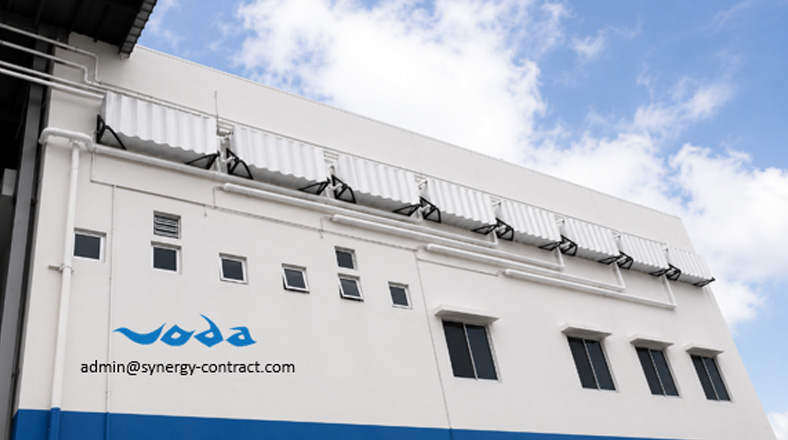
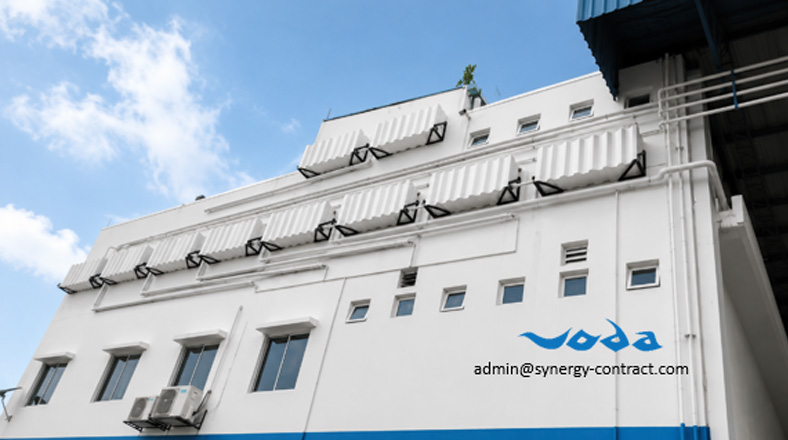
Voda Wall Mounted Rainwater Harvesting System implemented at Wasco Agro-Tech’s facility. Other than meeting ESG goals by achieving substantial water savings through toilet flushing, the Voda Systems were accomplished without needing to sacrifice operational spaces nor interrupting operation activities, made possible by its “plug and play” wall mounting characteristics.
2. Rising Water Tariffs and Operational Cost Pressures
Water tariffs in many industrial zones have had hikes, and further revisions are expected as utilities face infrastructure and climate pressures. For factories operating on thin margins, water cost escalation directly affects profitability.
In Malaysia, commercial and non-domestic water tariffs have increased under the federal government’s tariff adjustment program. In major regions like Selangor, Kuala Lumpur, and Putrajaya, the general non-domestic rate increased to RM3.51 per cubic metre (up by 57 sen) for the first 35 cubic metres in August 2025.
Rainwater harvesting provides:
- Long-term cost stability
- Reduced exposure to tariff increases
- Lower dependency on municipal supply during peak demand periods
- For large roof areas typical of factories, the return on investment can be significant
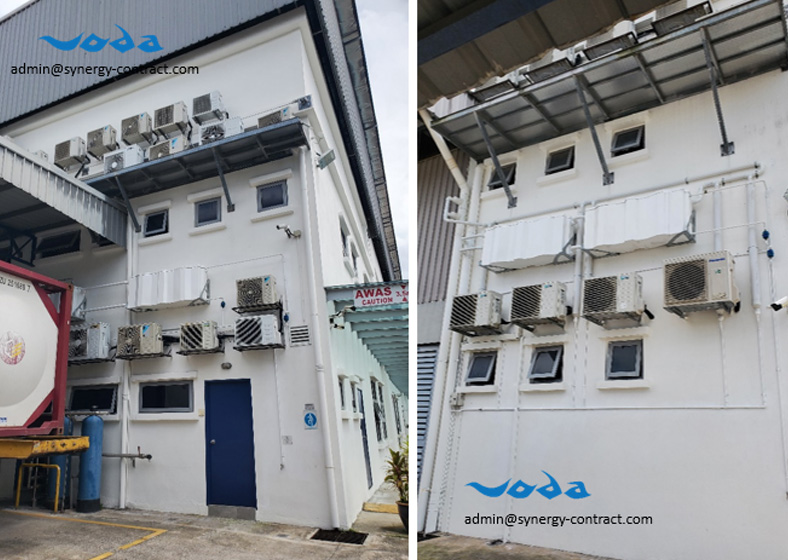
Pictured above is Voda Wall Mounted Rainwater Harvesting System implemented at Kraiburg TPE’s facility. As the company has identified toilet flushing being one of its top water consumptions, Voda Rainwater Systems are strategically installed at multiple structures within the facility to reduce reliance on treated water.
As part of Voda proposal process, a cost vs benefit analysis is typically conducted to balance the cost of system proposed vs the expected benefits (water savings) as we strive for a sensible return on investment (ROI).
3. Large Roof Catchment = High Rainwater Yield
Industrial buildings are uniquely suited for rainwater harvesting because they typically feature:
- Large, unobstructed roof areas
- Simple roof geometry
- High collection efficiency
These characteristics allow factories to harvest substantial volumes of rainwater even with moderate rainfall, making RWH systems high-impact with relatively low complexity.
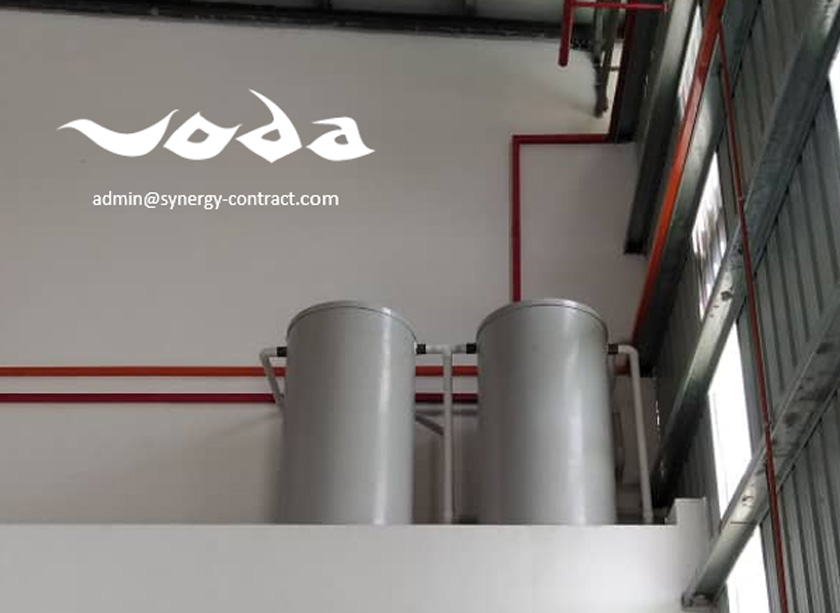
Modular Voda Cylinder Rainwater Harvesting System set up an Industrial structure which benefits from its large roof catchment area. The implement Voda System also functions on gravity without electricity. Wherever possible, the Voda team optimizes space by utilizing existing spaces that enable a zero-carbon system without sacrificing operational spaces.
4. ESG, Sustainability Reporting & Corporate Accountability
Environmental, Social & Governance (ESG) expectations are no longer limited to multinational corporations. Local manufacturers, exporters, and suppliers are increasingly required to demonstrate:
- Responsible water management
- Reduction in environmental footprint
- Alignment with sustainability frameworks and customer expectations
Rainwater harvesting directly supports:
- Environmental (E): Reduced freshwater abstraction and lower carbon footprint
- Social (S): Responsible resource use and community resilience
- Governance (G): Measurable sustainability initiatives for reporting and audits
For export-oriented factories, strong ESG practices can also improve supply-chain credibility with global clients.
As part of our value add & to facilitate our client’s green & sustainability reporting, a sustainable report which includes key metrics like return on investment (ROI), water/carbon savings etc.
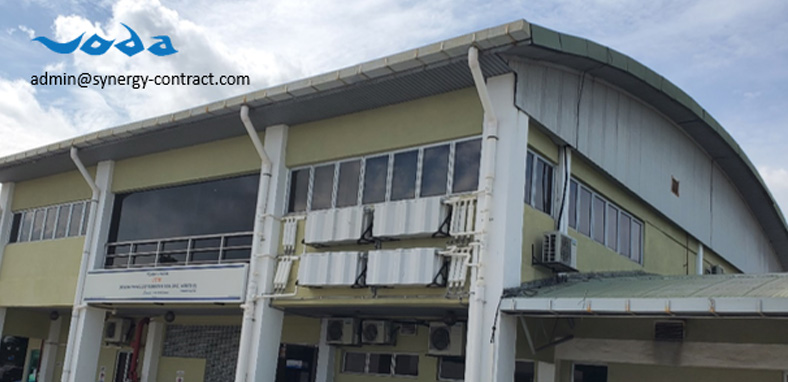
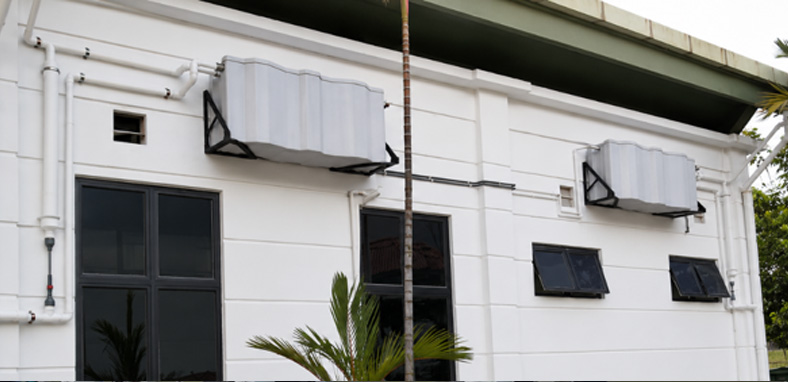
Pictured above is Voda Wall Mounted Rainwater Harvesting System implemented at multiple structures at Malaysia Airports Holdings Berhad. The accomplished Voda Rainwater Systems serves toilet flushing needs, which is identified to be one of the highest water uses.
5. Improved Water Security and Business Continuity
Industrial operations cannot afford water interruptions. Supply disruptions, pressure drops, or restrictions can halt production and cause financial losses.
Rainwater harvesting enhances water resilience by:
- Providing an on-site water buffer
- Supporting non-critical operations during shortages
- Reducing reliance on a single water source
This added layer of water security strengthens business continuity planning, especially in areas vulnerable to climate-related disruptions.
For example, with data centres placing significant strain on local water resources (particularly in tech hubs like Johor), federal regulators now make alternative water use a key condition for development.
Rainwater harvesting not just for the data centres but commercial structures within the area mitigates the high volumes of potable water and helps secure sustainable operations.
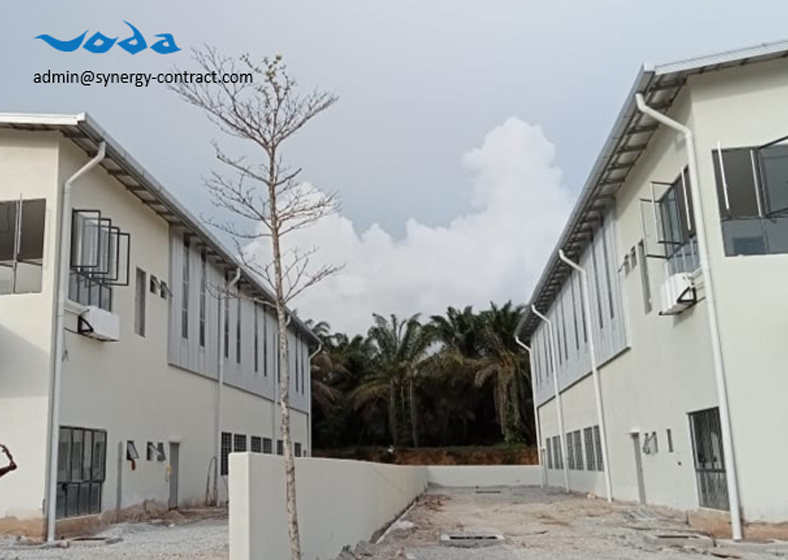
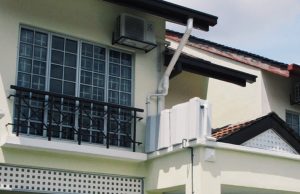
These photos show our flagship & patented Voda 1 Wall Mounted System, which is gravitational (i.e. fully zero carbon & functions without a pump) & is space saving. This appeals to industrial operators who are keen to harvest rainwater but may not have space to do so.
Apart from these helpful features, the Voda is also modular which makes it scalable for future expansion
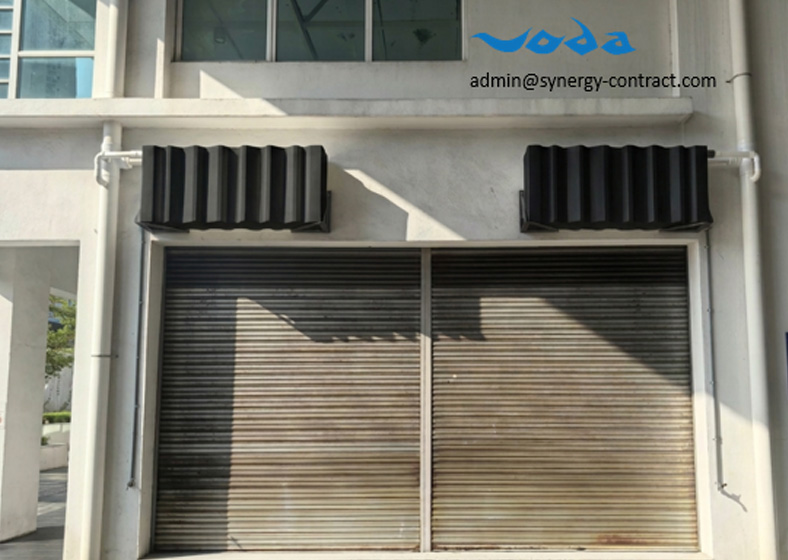
6. Low-Carbon and Energy-Efficient System Design
Modern industrial rainwater harvesting systems — particularly gravity-fed or low-energy designs — allow factories to conserve both water and energy.
Compared to conventional pumped systems:
- Gravity-based systems reduce electricity consumption
- Fewer mechanical components mean lower maintenance
- Operational carbon emissions are significantly reduced
This is especially relevant for factories pursuing net-zero, low-carbon, or energy-efficiency targets.
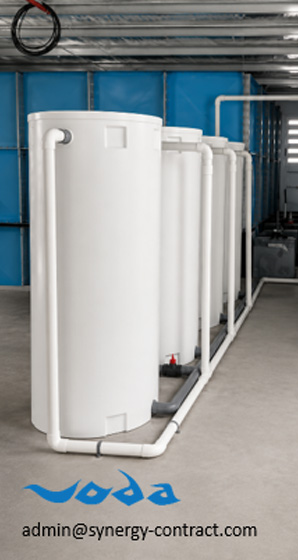
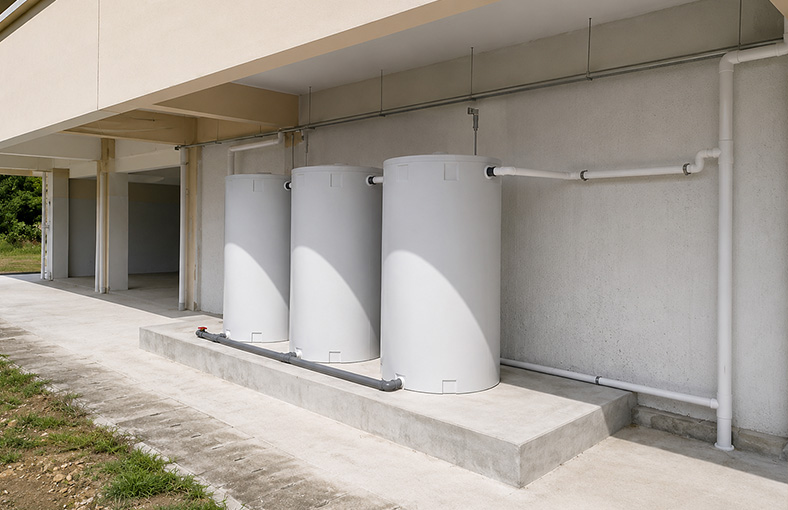
The above Voda Cylinder Rainwater Harvesting System was our implementation for Julie’s Manufacturing – which also functions on gravity without electricity. Wherever possible, the Voda team optimizes space by utilizing spaces that enable a zero-carbon system without sacrificing operational spaces.
Such decentralized system allows for a great degree of flexibility spatially (instead of having one large centralized system in 1 location) and is also more effective as it is able to take advantage of rainfall of multiple structures.
7. Compliance with Regulations and Green Building Standards
Rainwater harvesting supports compliance with:
- Local authority requirements for stormwater management
- Environmental impact mitigation
- Green building and sustainability certifications
For new industrial developments, incorporating rainwater harvesting early can:
- Reduce future retrofitting costs
- Improve regulatory approval outcomes
Enhance asset value and long-term usability
8. Smarter System Design for Industrial Facilities
Industrial rainwater harvesting is most effective when designed specifically for the facility, considering:
- Roof area and material
- Rainfall patterns
- Water demand profiles
- Overflow and back-up water integration
- Site layout and safety considerations
A well-designed system avoids:
- Oversizing that increases cost without benefit
- Undersizing that limits effectiveness
- Uncontrolled overflow and water wastage
- Energy-intensive retrofits
This design-led approach ensures the system delivers real operational and ESG value, not just symbolic sustainability.
Integrating the Internet of Things (IoT) in rainwater harvesting systems transforms traditional, passive collection into intelligent, automated water management. IoT optimizes collection efficiency, prevents overflow, automates distribution, and enables predictive maintenance for both domestic and agricultural use.
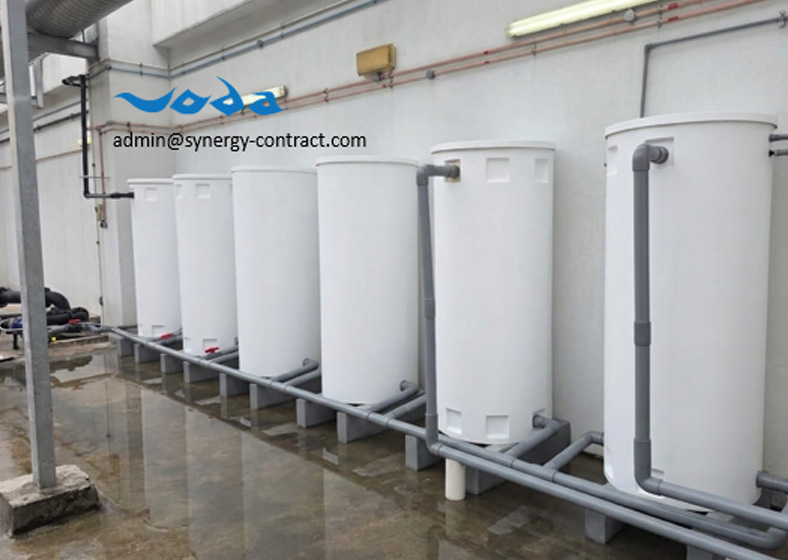
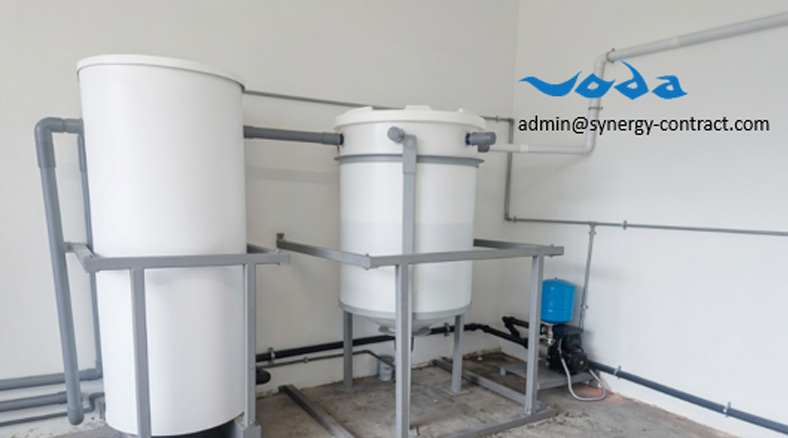
Pictured above is Voda Cylinder Rainwater System implemented for Boustead Ikano Sdn Bhd, which operates MyTOWN Shopping Centre. The accomplished system is one that embodies Internet of Things (IoT), featuring an Automated Water Management through sensing rods and control panels.
9. Government Incentives and Financial Support
In Malaysia, industrial rainwater harvesting projects may qualify for:
- Green Technology tax allowances
- Preferential green financing schemes
- State-level grants or rebates
These incentives further improve the financial case for implementation, particularly for capital-intensive facilities.
For industrial buildings and factories, rainwater harvesting is no longer just an environmental gesture — it is a strategic infrastructure decision. By reducing water costs, strengthening operational resilience, and supporting ESG commitments, rainwater harvesting delivers tangible benefits across financial, environmental, and governance dimensions.
As water scarcity, climate volatility, and sustainability expectations continue to rise, industrial facilities that invest in well-designed, low-carbon rainwater harvesting systems will be better positioned for long-term efficiency, compliance, and competitiveness.
Discover how the Voda Rainwater System can be tailored to your specific industrial needs. Download our latest resources or speak with our specialists.
Get in Touch
Green Master Harvest Sdn Bhd
- Website: vodarainwaterharvesting.com
- Email: admin@synergy-contract.com
- Contact: +603 9081 5076 | +6010 228 9652