
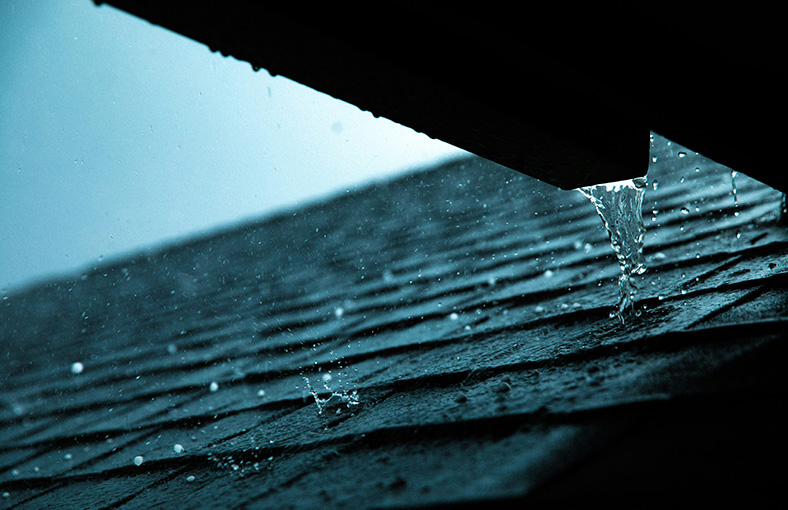
Rainwater harvesting — the practice of capturing, storing, and reusing rainwater — is increasingly gaining traction in Malaysia as both a traditional water-conservation practice and a modern sustainability solution.
Whether through simple collection barrels or engineered systems on commercial buildings, rainwater harvesting supports environmental stewardship, social wellbeing, and responsible governance — the three pillars of ESG (Environmental, Social, and Governance).
Why Rainwater Harvesting Matters for ESG and Sustainability
1. Environmental Benefits
Water Conservation & Reduced Demand on Municipal Supply
Malaysia’s tropical climate brings abundant rainfall year-round, yet rapid urbanization and rising water demand put pressure on public water infrastructure.
Harvesting rainwater directly from rooftops or catchment surfaces reduces reliance on municipal treated water — conserving a precious resource and lowering the energy used in water treatment and distribution.
Although rainwater harvesting in Malaysia is strictly and mainly used for non-potable (non-drinking quality) uses, it has the potential to save up to half of water consumption depending on intended uses of the installed rainwater system.
Mitigating Flooding & Stormwater Runoff
Urban areas are susceptible to flash floods due to increased impermeable surfaces. Rainwater collection slows surface runoff and helps manage stormwater more effectively, reducing flood risk while protecting soil and waterways from erosion and pollution.
Supporting Climate Change Adaptation
As extreme weather patterns become more common, localized water storage systems offer aid against both droughts and storms — contributing to climate adaptation strategies. By reducing drawdown on stressed water resources, rainwater harvesting strengthens water security for homes, communities, and industries alike.
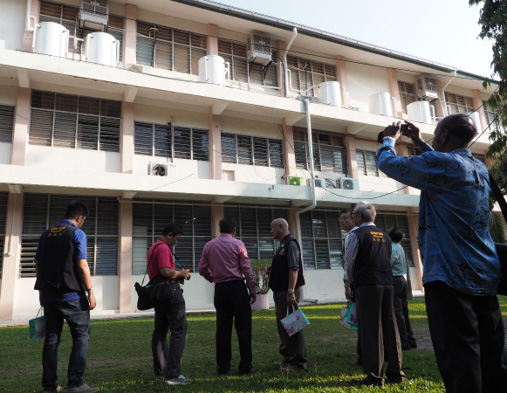
Voda Rainwater Harvesting System designed by the Voda Team in SMJK C Dindings, Sitiawan. Large Voda Cylinder Rainwater Tanks are set up to capture high rainfall collected by the roof which are then channeled to flush toilets of the school. The school estimates to be enjoying at least 50% savings in water consumption
2. Social & Community Impact
Empowering Residents & Businesses
Rainwater harvesting enables households and institutions to manage their own water needs more sustainably, reducing utility costs and enhancing self-reliance. In schools and community spaces, these rain collection systems also serve as educational tools on resource conservation and innovation.
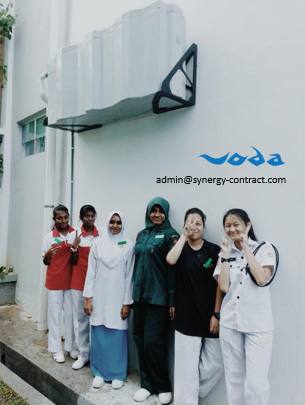
The Voda 1 Wall Mounted System that are implemented in schools encourages positive engagements towards other areas of sustainability including education, planting, conservation.
Public Health & Water Quality Awareness
Modern rain storage systems often include filtration that can improve water quality for non-potable uses, increasing awareness around safe water practices and health impacts.
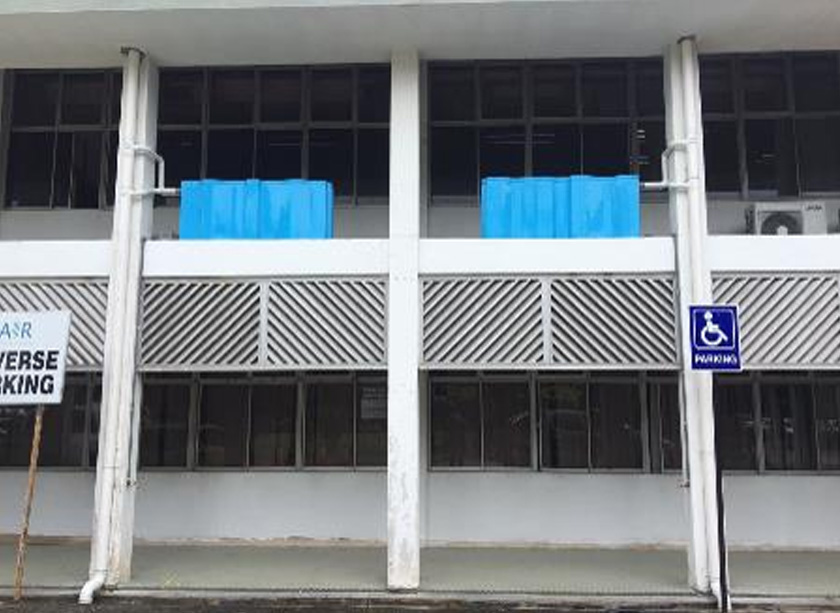
The Voda 1 Wall Mounted System implemented in offices of Pengurusan Air Selangor, in its striking blue corporate color, aimed at increasing awareness towards water conservation & sustainability through alternative water.
3. Governance & Policy Alignment
ESG Reporting & Corporate Responsibility
For businesses pursuing Environmental, Social, and Governance commitments — including reporting frameworks like GRI or national sustainability agendas — implementing rainwater harvesting systems demonstrates measurable progress toward conserving water and reducing environmental footprints.
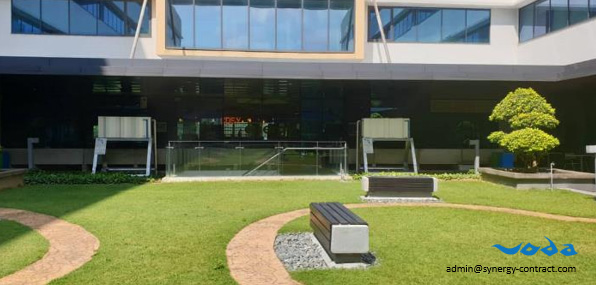
Voda Rainwater Harvesting System implemented in the central courtyard of Wisma Shell Cyberjaya highlighting the company’s commitment in environmental sustainability.
Aligned with its overall corporate ESG commitments, larger-scaled Voda Rainwater Harvesting Systems are also implemented in both wings of Wisma Shell Cyberjaya for toilet flushing uses to achieve larger and more meaningful water savings.
Pictured above is Voda Wall Mounted Rainwater Harvesting System implemented at multiple structures at Malaysia Airports Holdings Berhad. The accomplished Voda Rainwater Systems serves toilet flushing needs, which is identified to be one of the highest water uses.
Green Building Standards
Rainwater harvesting can help developments meet local criteria for green building certifications, like the Green Building Index (GBI) or Sistem Penuaian & Pengumpulan Air Hujan (SPAH) compliance under municipal bylaws, tying infrastructure decisions to broader sustainability policies.
Voda Rainwater Harvesting System vs Traditional Systems
While all rainwater harvesting supports sustainability in principle, design and operation affect the system’s carbon impact, efficiency, and practicality.
Here’s how the Voda Rainwater Harvesting System aims to do more against traditional setups.
Traditional Rainwater Harvesting Systems
Typical Features
- Roof catchment, gutters, downpipes, storage tank.
- Often include a pump to move water from storage to taps or outlets.
- Often comprise of centralized, large and bulky tanks
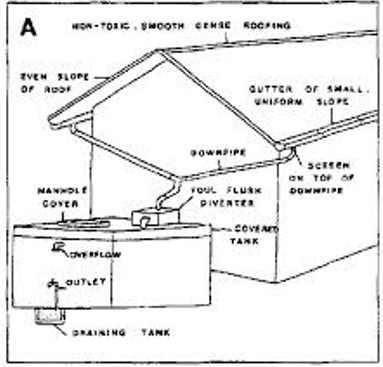
Traditional rainwater systems often involve large storage tanks that require space & electrical pumps for usage which might affect operational spaces while failing to meet net zero goals.
Drawbacks
Energy Use & Carbon Emissions: Most systems rely on electrical pumps to distribute water, consuming energy and increasing operational carbon emissions — potentially offsetting some environmental gains of water conservation.
Footprint & Space: Ground tanks and pump systems can occupy significant space, complicating installation in dense urban settings. Some households lack space while businesses may require to sacrifice operational spaces to make way for rainwater systems.
Maintenance Requirements: Mechanical components especially pumps require upkeep, repairs, and electricity.
What Sets Voda Rainwater System Apart
- Zero/Low Carbon Operation: Voda systems are engineered to function via gravity alone wherever possible, eliminating the need for electrical pumps and significantly reducing the system’s carbon footprint.
- Space-Efficient Design: The Voda’s patented wall-mounted set up keeps tanks off the ground and saves valuable space — particularly suited for urban homes or businesses – as they strive to pose minimal disruptions to livelihood and existing operations.
- Ease of Installation: The design allows for a “plug-and-play” install with minimal structural modifications, lowering labour and material costs compared to conventional tank installations that often require a large investment/capex.
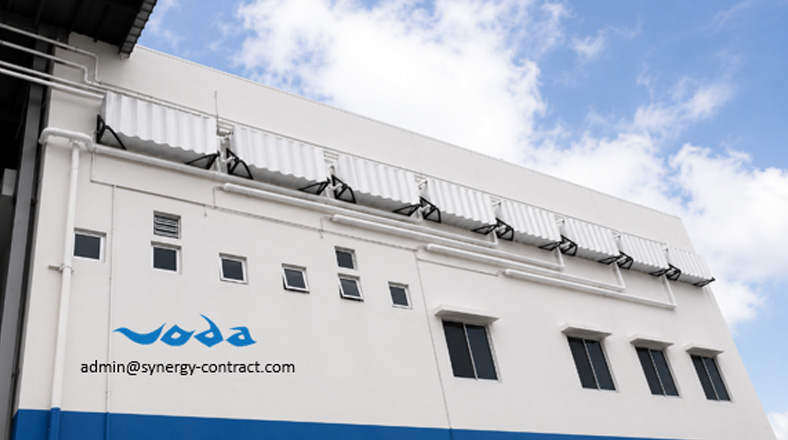
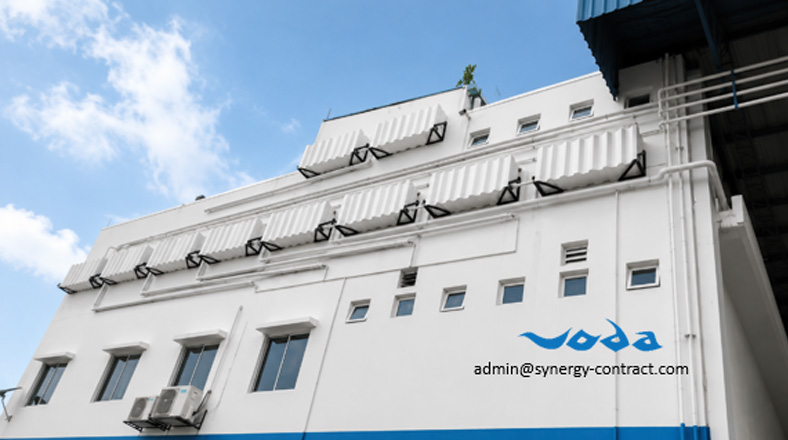
Voda Wall Mounted Rainwater Harvesting System implemented at Wasco Agro-Tech’s facility. Other than meeting ESG goals by achieving substantial water savings through toilet flushing, the Voda Systems were accomplished without needing to sacrifice operational spaces nor interrupting operation activities, made possible by its “plug and play” wall mounting characteristics.
Environmental & Practical Advantages
- Low Operational Emissions: By removing pump electricity from the equation, Voda aims to align more closely with net-zero goals and minimizes indirect energy use.
- Reduced Maintenance: Fewer electrical parts mean simpler maintenance and longer service life with lower long-term costs and resource use.
- Aesthetics & Adoption: Sleek design may encourage broader adoption in residential and commercial settings, further advancing ESG objectives in building projects.
Unlike generic rainwater harvesting solutions, the Voda Rainwater Harvesting System is not a one-size-fits-all product. It is a designed system, developed through architectural understanding, site assessment, and engineering logic to ensure optimal performance, safety, and long-term sustainability.
Architectural & System Design Expertise
At Voda, rainwater harvesting is approached as part of the built environment, not just a tank installation. Each system is carefully assessed and designed based on:
- Roof catchment area & material (effective collection yield varies significantly by surface type)
- Rainfall patterns & intensity specific to the project location
- Building height, layout & gravity flow feasibility
- Available wall structure & load-bearing capacity
- Intended usage demand (irrigation, toilet flushing, washdown, etc.)
- Overflow, back-up water integration & safety considerations
- This architectural and spatial assessment ensures that the system
- Works efficiently without pumps, where feasible
- Integrates seamlessly with the building’s façade and services
- Delivers realistic water savings — not just theoretical capacity
This design-led approach is a key reason Voda systems can operate as low-carbon or no-carbon solutions, relying on gravity rather than electricity.
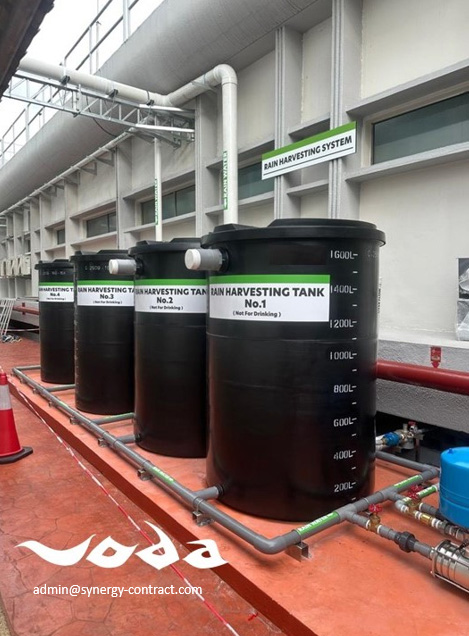
Where wall mounting isn’t feasible, Voda Cylindrical Systems are also available at different sizes and capacities, depending on what suits the designated space.
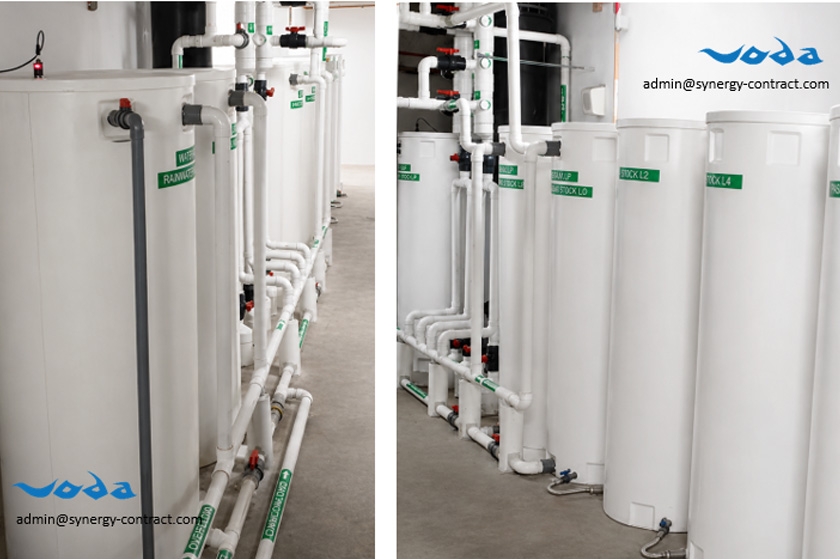
The above is our implementation at Haleon Malaysia. As seen in this photo, component labelling can be incorporated in accordance with the management’s standards to enhance system identification and facilitate future maintenance works.
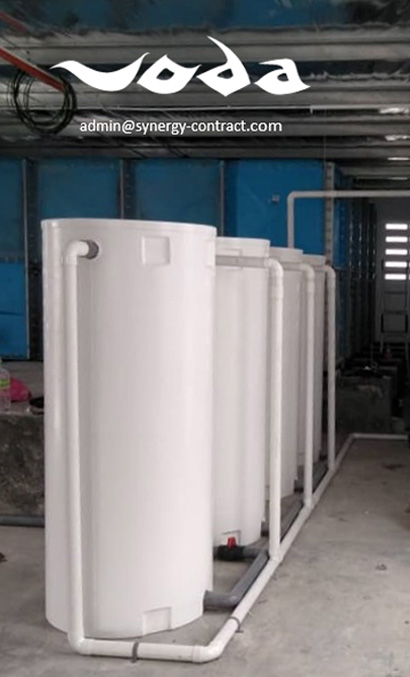
The above Voda Cylinder Rainwater Harvesting System was our implementation for Julie’s Manufacturing – which also functions on gravity without electricity. Wherever possible, the Voda team optimizes space by utilizing spaces that enable a zero-carbon system without sacrificing operational spaces.
Such decentralized system allows for a great degree of flexibility spatially (instead of having one large centralized system in 1 location) and is also more effective as it is able to take advantage of rainfall of multiple structures.
A Better ESG Outcome Through Proper Design
From an ESG perspective, good design is governance. A poorly designed rainwater harvesting system may:
- Underperform
- Require energy-intensive retrofits
- Waste water through uncontrolled overflow
- Increase maintenance and lifecycle emissions
- By investing in proper upfront assessment and design, organisations achieve:
- Measurable water savings
- Lower operational carbon footprint
- Credible ESG reporting outcomes
- Long-term cost efficiency
Rainwater harvesting is more than a water-saving measure — in Malaysia it is an adaptable sustainability strategy that directly supports ESG goals, from reducing pressure on municipal water systems to contributing to climate resilience and environmental stewardship.
While traditional rainwater systems already deliver important benefits, next-generation designs like the Voda Rainwater Harvesting System aims to push the envelope further by lowering carbon emissions, cutting energy use, and enhancing feasibility in urban and corporate environments.
As corporations, developers, and communities seek solutions that deliver measurable environmental gains, robust social impact, and governance advantages, rainwater harvesting — particularly in its low-carbon form — stands out as a practical, scalable, and sustainable choice for Malaysia’s future.
About Green Master Harvest & the Voda Rainwater System
As a rainwater-harvesting system specialist, Green Master Harvest Sdn Bhd designs and supplies rainwater harvesting systems, with Voda being its flagship brand.
A patented technology (Patent Grant Number: MY-178044-A), Voda is the first wall-mounted rain system, making it zero carbon & space saving.
Backed by its architectural unit, the Group also offers rainwater-harvesting advisory/consultations, design & build services and assists in rain-harvesting related council matters.
To date, Green Master Harvest has served a diverse clientele comprising corporates, property developers, architects, engineers and household consumers in fulfilling their water-conservation intentions while seamlessly integrated Voda into a range of existing built environments—including but not limited to:-
- office buildings
- manufacturing and assembly facilities
- shopping centres
- standalone commercial buildings
- retail outlets
Throughout its work, its approach is consistent – which is to provide clients high-quality water saving solutions that are practical, cost saving, eco-friendly and aesthetic.
—
Discover how the Voda Rainwater System can be tailored to your specific industrial needs. Download our latest resources or speak with our specialists.
Get in Touch
Green Master Harvest Sdn Bhd
- Website: vodarainwaterharvesting.com
- Email: admin@synergy-contract.com
- Contact: +603 9081 5076 | +6010 228 9652


